Burn Intensive Care Unit
Critical care for severe thermal injury
A Burn Intensive Care Unit is one of the most specialized units in the hospital, and most facilities do not have one, burn patients are typically transferred to regional burn centers. The patients here have suffered severe thermal, chemical, or electrical burns, and the nursing work is unlike any other ICU. A burn is a full-body injury. The skin is lost, which means the barrier to infection and fluid is gone, and the metabolic response is massive and sustained. The nurse is managing enormous fluid resuscitation in the first 24 hours, performing painful wound care that can take hours per patient, monitoring for compartment syndrome in burned limbs, and supporting a patient through a recovery measured in weeks and months. The emotional weight is significant, burn injuries are painful, disfiguring, and often involve long hospitalizations and uncertain outcomes.
Nurse-to-Patient Ratio
Typically 1:1 for the most acute patients, particularly during initial resuscitation or after grafting surgery, and 1:2 for stabilizing patients.
Note: Nurse-to-patient ratios in critical care are governed by individual state regulations, professional guidelines, or by the hospital's own staffing model. There is no single national standard. Some units also elect a team-based approach that incorporates advanced practice providers, respiratory therapists, and CNAs to extend care delivery. The ratios and staffing model described here are illustrative and for demonstration only; actual assignments vary by facility, acuity, and location.
Key Credentials
What Is a Burn Intensive Care Unit?
A Burn Intensive Care Unit is a specialized critical care unit within a designated burn center that manages patients with severe burn injuries. The unit cares for patients with large total body surface area burns, inhalation injury, electrical burns, and chemical burns. Care centers on fluid resuscitation using burn-specific formulas, airway management for inhalation injury, surgical and non-surgical wound care, infection prevention, and the management of the profound metabolic response to severe burn injury. The unit operates with burn surgeon and intensivist co-management, a 1:1 or 1:2 nurse-to-patient ratio, and specialized environmental controls for temperature and infection prevention.
The Patient Population
Adults and sometimes children with severe burn injuries. Common populations include patients with burns covering a large percentage of total body surface area, those with inhalation injury from fires in enclosed spaces, electrical burn patients who may have deep tissue and cardiac injury, and chemical burn patients requiring specific decontamination and treatment. The population spans all ages, and many patients were injured in accidents at home, work, or in motor vehicle crashes. The recovery is prolonged, often involving multiple surgeries for excision and grafting, and the psychological impact of burn injury is significant.
The Nurse's Role
The Burn ICU nurse manages one or two patients with a focus on fluid resuscitation, wound care, and systemic support. In the first 24 hours the nurse administers large-volume fluid resuscitation calculated by burn formulas, titrating to urine output and hemodynamic response. The role involves managing the airway for inhalation injury, often requiring intubation and mechanical ventilation, performing extensive wound care that can take several hours per session, monitoring burned limbs for compartment syndrome, and managing the hypermetabolic response with nutritional support and temperature control. The nurse administers potent pain medication during wound care, prevents infection through strict aseptic technique, coordinates with the burn surgery team on excision and grafting, and supports patients and families through a long and emotionally demanding recovery.
Skills Required
Burn fluid resuscitation using Parkland and modified Brooke formulas
Extensive burn wound care and dressing techniques
Inhalation injury airway management and ventilator support
Compartment syndrome recognition and escharotomy support
Hypermetabolic response management and aggressive nutritional support
Pain management during prolonged wound care sessions
The Real Challenges
Burn critical care is physically and emotionally demanding in ways that few specialties are. The wound care is extensive and painful, a single dressing change can take two or three hours and require significant pain medication, and the nurse has to perform that care while maintaining aseptic technique and assessing the wound for infection. The fluid resuscitation in the first 24 hours is massive and requires constant titration, because under-resuscitation causes organ failure and over-resuscitation causes compartment syndrome and pulmonary edema. The recovery is long, often measured in months, and the nurse builds deep relationships with patients who are facing disfiguring injuries and uncertain outcomes. The emotional toll on staff is real, and burn centers invest significantly in team support.
Why This Unit Matters
Severe burn injury is one of the most devastating forms of trauma, and the quality of critical care in the first hours and days directly affects survival and long-term function. Accurate fluid resuscitation prevents organ failure and compartment syndrome. Effective wound care and infection prevention prevent sepsis, which is the leading cause of death in burn patients. The prolonged nature of burn recovery means that nursing quality compounds over time, every dressing change, every assessment, every interaction shapes whether the patient heals with the best possible functional and cosmetic outcome. Burn centers are regional resources, and the competence of their nursing staff is a direct factor in outcomes for an entire region.
Frequently Asked Questions
What is a Burn Intensive Care Unit?
A Burn ICU is a specialized critical care unit within a designated burn center that manages patients with severe burn injuries. Nursing focuses on fluid resuscitation, airway management for inhalation injury, extensive wound care, infection prevention, and management of the hypermetabolic response to severe burns.
Why is fluid resuscitation so important in burn care?
Severe burns cause massive fluid shifts because the skin barrier is lost. In the first 24 hours, burn patients require large-volume fluid resuscitation calculated by formulas like Parkland, titrated to urine output. Under-resuscitation causes organ failure and shock, while over-resuscitation causes compartment syndrome and pulmonary edema. Precise nursing management of this resuscitation is critical to survival.
What is inhalation injury and how is it managed?
Inhalation injury is damage to the airway and lungs from breathing hot gases, smoke, or chemicals during a fire. It can cause airway swelling that requires intubation, lung injury that requires ventilator support, and carbon monoxide poisoning. Burn ICU nurses manage the airway, provide ventilatory support, and monitor for respiratory deterioration that may require escalation.
Hiring for a Burn ICU Unit?
We connect facilities with experienced critical care nurses whose backgrounds align with burn intensive care unit staffing needs. Start a confidential conversation about your opening today. Explore other critical care units or read the career roadmap.
The clinical information on this page is provided for general educational purposes only and reflects common practices across U.S. critical care settings. It is not medical advice, a clinical standard, or a guarantee of any specific staffing model, patient outcome, or credentialing requirement. Nurse-to-patient ratios, scope of practice, required certifications, and unit protocols vary by facility, state law, and accrediting body. Critical Care Recruiter is an independent recruitment facilitator that refers qualified candidates to client facilities; we do not employ, supervise, or direct the clinical care delivered by placed professionals. Final credentialing, licensure verification, and clinical competency determinations are the sole responsibility of the hiring facility.
Related Critical Care Units
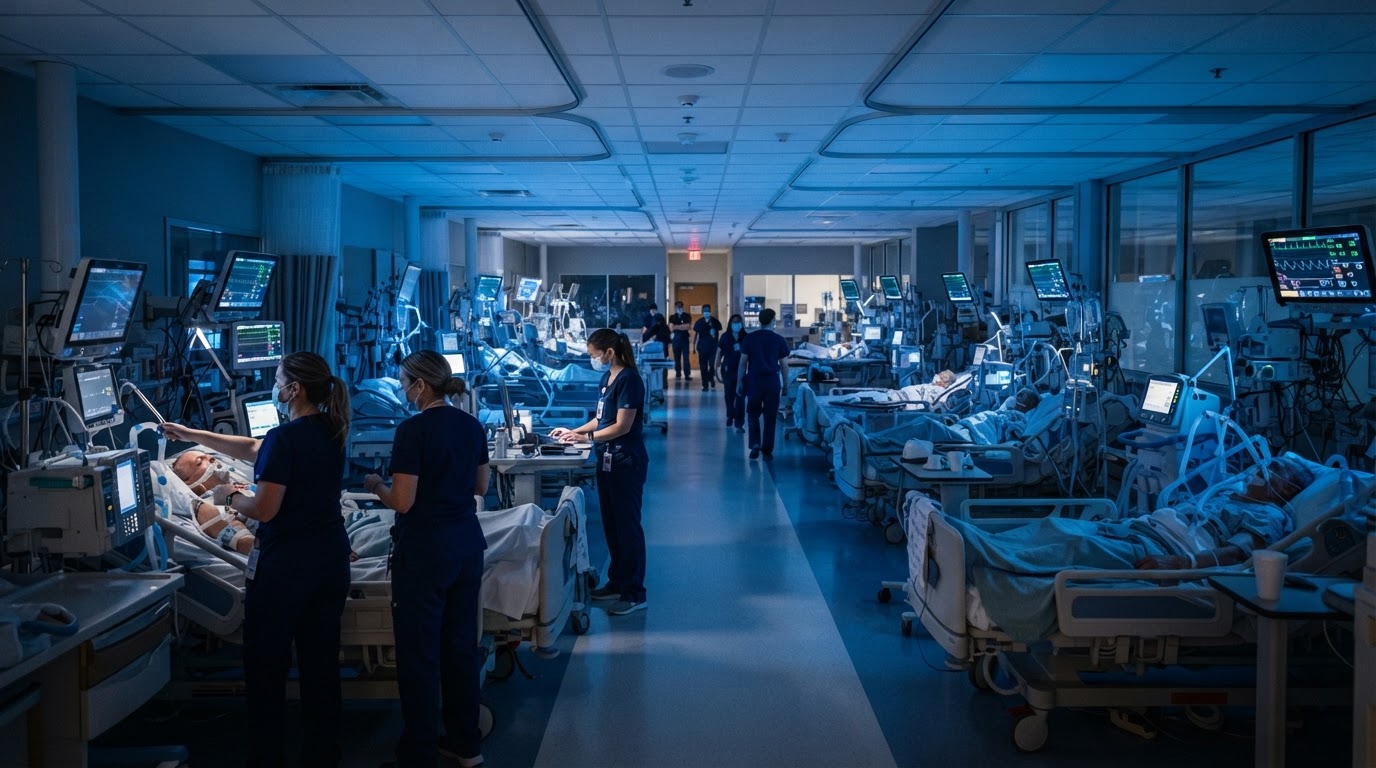
Medical Intensive Care Unit (MICU)
Medical ICUs caring for the sickest medical patients, septic shock, respiratory failure, diabetic crises, and multi-organ failure requiring ventilator support, vasoactive drips, and continuous monitoring.
Surgical Intensive Care Unit (SICU)
Surgical ICUs managing the highest-acuity post-operative patients, emergency surgery, major vascular, trauma, and complex abdominal procedures requiring ventilator support, hemodynamic monitoring, and complication vigilance.
Neuro Intensive Care Unit (Neuro ICU)
Neuro ICUs managing traumatic brain injury, stroke, subarachnoid hemorrhage, and post-neurosurgical patients, intracranial pressure monitoring, frequent neuro assessment, and tight physiologic control.