Surgical Intensive Care Unit (SICU)
Critical care for the complex post-operative patient
A Surgical Intensive Care Unit takes the patients that the operating room is not ready to send to a regular floor. These are people who just underwent a massive operation, an emergency bowel resection for perforation, a ruptured abdominal aortic aneurysm repair, a multi-trauma case, and their bodies are in the immediate aftermath of controlled trauma. The nursing work blends critical care skills with surgical recovery principles. The nurse is watching the surgical site, managing drains and tubes that tell the story of what happened in the OR, titrating drips to support a hemodynamic system that is still stabilizing, and trying to get the patient off the ventilator as quickly as possible to reduce complications. The pace is different from a MICU, admissions come from the OR rather than the emergency department, but the intensity is the same.
Nurse-to-Patient Ratio
Typically 1:1 for fresh post-operative or unstable patients and 1:2 for stabilizing patients, governed by acuity and surgical service line.
Note: Nurse-to-patient ratios in critical care are governed by individual state regulations, professional guidelines, or by the hospital's own staffing model. There is no single national standard. Some units also elect a team-based approach that incorporates advanced practice providers, respiratory therapists, and CNAs to extend care delivery. The ratios and staffing model described here are illustrative and for demonstration only; actual assignments vary by facility, acuity, and location.
Key Credentials
What Is a Surgical Intensive Care Unit (SICU)?
A Surgical Intensive Care Unit, or SICU, is a specialized critical care unit that manages post-operative patients who require intensive monitoring and life support after surgery. The unit cares for patients following major abdominal, vascular, thoracic, and trauma surgery, as well as emergency surgical procedures where the patient is physiologically unstable at the end of the operation. Patients are typically intubated, on vasoactive medications, and monitored continuously for surgical complications like bleeding, anastomotic leak, and abdominal compartment syndrome. The SICU operates with intensivist and surgical team co-management, a 1:1 or 1:2 nurse-to-patient ratio, and close coordination with the operating room for unplanned returns.
The Patient Population
Adults recovering from major surgery who are too unstable for a standard post-operative floor. Common populations include emergency general surgery patients, perforated bowel, necrotizing fasciitis, ischemic bowel, vascular surgery patients like ruptured aneurysm repairs and complex bypasses, trauma patients from motor vehicle crashes and falls, and elective surgical patients who developed intraoperative instability. Many carry significant comorbidity, diabetes, cardiovascular disease, chronic lung disease, that complicates surgical recovery. The unit also manages surgical complications that develop after an initial operation, like a leak at a surgical connection or post-operative bleeding.
The Nurse's Role
The SICU nurse manages one or two post-operative critical care patients, and the role sits at the intersection of critical care and surgical recovery. The nurse titrates vasoactive drips to support hemodynamics that are still stabilizing after anesthesia and blood loss, manages the ventilator and works toward extubation as soon as the patient is ready, and monitors surgical drains and tubes, Jackson-Pratt, Blake, chest tubes, nasogastric tubes, for output that signals bleeding or leak. Frequent abdominal assessment is essential to detect distension, rigidity, or worsening pain that may indicate a surgical emergency. The nurse manages pain with multimodal approaches, prevents hypothermia and coagulopathy, coordinates with the surgical team on wound care and planned returns to the OR, and supports early mobilization once the patient is stable enough.
Skills Required
Post-operative critical care and hemodynamic stabilization
Ventilator management and rapid weaning protocols
Surgical drain, chest tube, and complex wound management
Recognition of surgical complications, bleeding, leak, abdominal compartment syndrome
Vasoactive drip titration in the post-operative context
Multimodal pain management and early mobilization
The Real Challenges
The SICU nurse has to hold two clinical frameworks at once, critical care and surgical recovery, and they do not always align cleanly. A patient may be hemodynamically stable enough to extubate but surgically not ready to move, or vice versa. The complication window is narrow and unforgiving: an anastomotic leak can present subtly as a rising heart rate and mild abdominal discomfort before it becomes septic shock, and the nurse who catches that early saves the patient a return to the OR and a prolonged stay. Trauma cases add another layer, with the emotional weight of caring for patients injured suddenly and often young. Coordination with the surgical team is constant, and the nurse is frequently the bridge between the OR, the intensivist, and the family.
Why This Unit Matters
Major surgery is a controlled injury, and what happens in the first 24 to 48 hours after the operation often determines whether the patient recovers on the expected trajectory or spirals into complications. The SICU nurse is the person whose assessments and interventions catch the bleeding, the leak, the developing abdominal compartment syndrome before they become lethal. Early extubation, driven by nursing, reduces ventilator-associated complications. Early mobilization, also nursing-driven, prevents the deconditioning that turns a surgical patient into a long-term patient. The quality of surgical critical care nursing directly affects mortality, length of stay, and whether the patient goes home or to a long-term facility.
Frequently Asked Questions
What is a Surgical Intensive Care Unit (SICU)?
A SICU is a specialized critical care unit that manages post-operative patients who require intensive monitoring and life support after major or emergency surgery. It cares for patients following abdominal, vascular, thoracic, and trauma surgery who are too unstable for a standard post-operative floor, with nurses managing one or two patients at a time.
How is a SICU different from a MICU?
A SICU focuses on post-operative critical care, managing surgical complications, drains, and recovery from anesthesia and blood loss, while a MICU manages life-threatening medical illness like sepsis and respiratory failure. Both provide intensive care with similar ratios, but the patient population and clinical focus differ. Some hospitals combine them into a mixed medical-surgical ICU.
What complications do SICU nurses watch for after surgery?
SICU nurses monitor for post-operative bleeding, anastomotic leak at surgical connections, abdominal compartment syndrome, surgical site infection, deep vein thrombosis, and respiratory complications like atelectasis and pneumonia. Early recognition of these complications is critical to preventing deterioration and unplanned returns to the operating room.
Hiring for a SICU Unit?
We connect facilities with experienced critical care nurses whose backgrounds align with surgical intensive care unit (sicu) staffing needs. Start a confidential conversation about your opening today. Explore other critical care units or read the career roadmap.
The clinical information on this page is provided for general educational purposes only and reflects common practices across U.S. critical care settings. It is not medical advice, a clinical standard, or a guarantee of any specific staffing model, patient outcome, or credentialing requirement. Nurse-to-patient ratios, scope of practice, required certifications, and unit protocols vary by facility, state law, and accrediting body. Critical Care Recruiter is an independent recruitment facilitator that refers qualified candidates to client facilities; we do not employ, supervise, or direct the clinical care delivered by placed professionals. Final credentialing, licensure verification, and clinical competency determinations are the sole responsibility of the hiring facility.
Related Critical Care Units
Medical Intensive Care Unit (MICU)
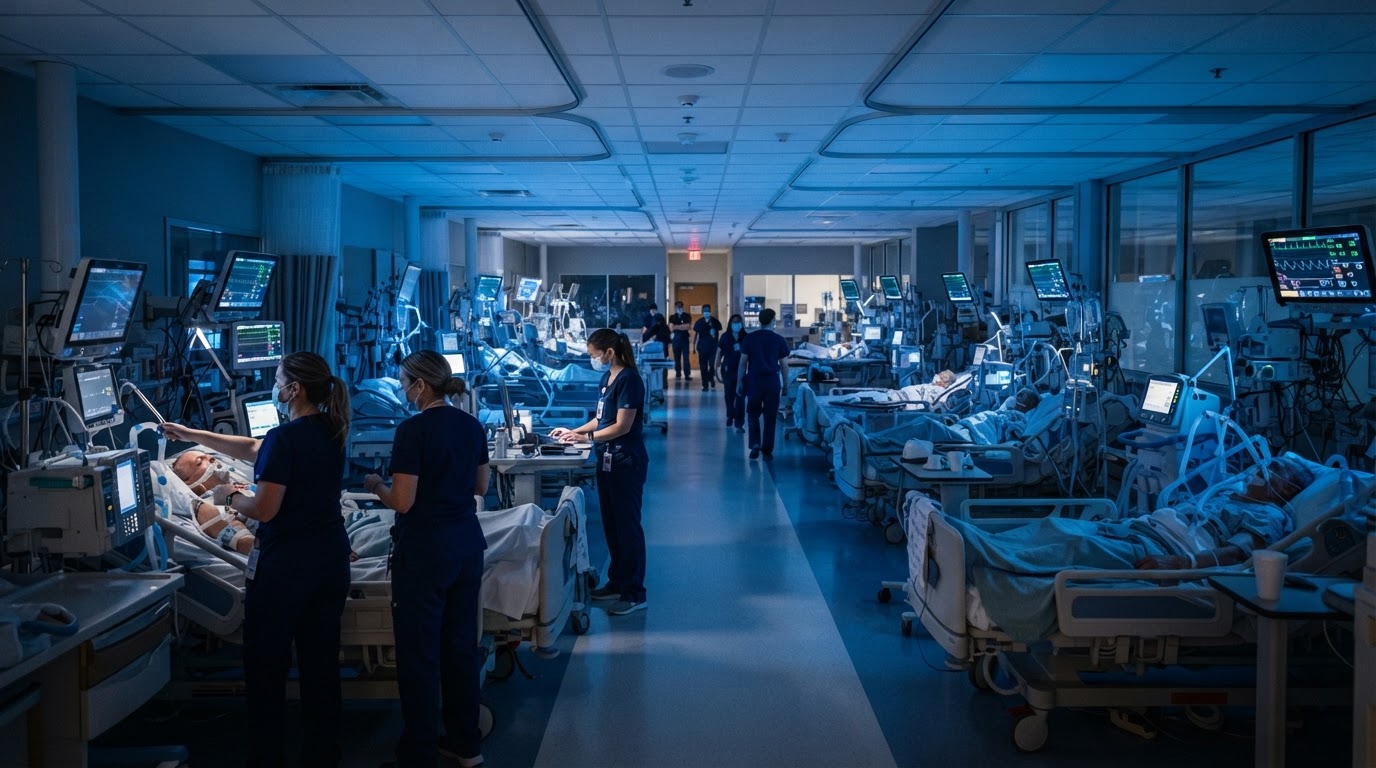
Medical ICUs caring for the sickest medical patients, septic shock, respiratory failure, diabetic crises, and multi-organ failure requiring ventilator support, vasoactive drips, and continuous monitoring.
Neuro Intensive Care Unit (Neuro ICU)
Neuro ICUs managing traumatic brain injury, stroke, subarachnoid hemorrhage, and post-neurosurgical patients, intracranial pressure monitoring, frequent neuro assessment, and tight physiologic control.
Cardiac Intensive Care Unit (CICU)
Cardiac ICUs managing the most acute cardiac patients, cardiogenic shock, post-MI complications, severe heart failure, and post-arrest patients requiring mechanical circulatory support and advanced hemodynamic monitoring.