Neuro Intensive Care Unit (Neuro ICU)
Protecting the brain after catastrophic neurological injury
A Neuro Intensive Care Unit is one of the most assessment-driven environments in the hospital. The patients here have sustained an injury to the brain or nervous system that is actively threatening their survival or their function, a traumatic brain injury from a car crash, a massive stroke, a ruptured aneurysm, a brain tumor resection. The nursing work revolves around protecting the injured brain from secondary damage. Every physiologic parameter matters: blood pressure too low and the injured brain does not get perfused, too high and swelling worsens; temperature too high and brain metabolism increases; intracranial pressure too high and herniation follows. The neuro ICU nurse is checking pupils, motor strength, and level of consciousness at intervals measured in minutes, because a change in any of them may be the only signal that the brain is in trouble.
Nurse-to-Patient Ratio
Typically 1:1 for the most acute patients and 1:2 for stabilizing patients, reflecting the frequency of neurological assessment required.
Note: Nurse-to-patient ratios in critical care are governed by individual state regulations, professional guidelines, or by the hospital's own staffing model. There is no single national standard. Some units also elect a team-based approach that incorporates advanced practice providers, respiratory therapists, and CNAs to extend care delivery. The ratios and staffing model described here are illustrative and for demonstration only; actual assignments vary by facility, acuity, and location.
Key Credentials
What Is a Neuro Intensive Care Unit (Neuro ICU)?
A Neuro Intensive Care Unit, or Neuro ICU, is a specialized critical care unit dedicated to patients with life-threatening neurological conditions. The unit manages traumatic brain injury, ischemic and hemorrhagic stroke, subarachnoid hemorrhage from ruptured aneurysms, status epilepticus, and post-operative neurosurgical patients. Care centers on intracranial pressure management, cerebral perfusion optimization, continuous electroencephalography for seizure detection, and frequent neurological assessment. The unit operates with neurointensivist oversight, neurosurgical consultation, and a 1:1 or 1:2 nurse-to-patient ratio. The SCRN and CNRN credentials recognize competency in this specialty.
The Patient Population
Adults with acute neurological injury. The largest groups are traumatic brain injury patients from falls, motor vehicle crashes, and assaults; stroke patients, both ischemic, often post-thrombectomy, and hemorrhagic; subarachnoid hemorrhage patients from ruptured aneurysms who are at risk for vasospasm; patients in status epilepticus requiring continuous EEG and aggressive treatment; and post-operative neurosurgical patients recovering from tumor resection, aneurysm clipping, or hematoma evacuation. The population spans all adult ages, and many patients arrive previously healthy, injured suddenly, which adds to the emotional weight for families.
The Nurse's Role
The Neuro ICU nurse manages one or two patients with a focus on neurological assessment and tight physiologic control. The nurse performs neuro checks, pupils, motor strength, sensation, speech, level of consciousness, at intervals ranging from every 15 minutes to every hour depending on acuity, and documents any change immediately. The role involves managing intracranial pressure monitors and external ventricular drains, titrating medications to maintain cerebral perfusion pressure within target ranges, controlling temperature with cooling devices, managing continuous EEG for seizure detection, and executing stroke and traumatic brain injury protocols. The nurse coordinates constantly with the neurointensivist and neurosurgeon, and is typically the first to detect a neurological change that triggers imaging or surgical intervention.
Skills Required
Expert neurological assessment at frequent intervals, pupils, Glasgow Coma Scale, motor and sensory testing
Intracranial pressure and external ventricular drain management
Cerebral perfusion pressure targeting and hemodynamic titration
Continuous EEG monitoring and seizure recognition
Temperature management with therapeutic hypothermia devices
Stroke and traumatic brain injury protocol execution
The Real Challenges
Neuro critical care is intellectually demanding in a way that few specialties are. The assessments are subtle, a pupil that is one millimeter larger, a motor strength grade that dropped from 5 to 4, a new word-finding difficulty, and the nurse has to detect these changes against a baseline that may itself be abnormal. The stakes are absolute: a rising intracranial pressure that goes unrecognized can lead to brain herniation and death within minutes. The patient population is emotionally heavy. Many patients were healthy and independent before a sudden injury, and families are confronting catastrophic change with little warning. End-of-life decisions are common, and the nurse is often the person helping a family understand that the person they knew may not come back.
Why This Unit Matters
In neuro critical care, time is brain, literally. Every minute of delayed recognition of a neurological change means more tissue at risk. The quality of nursing assessment, the speed of escalation, and the precision of physiologic management directly affect whether a stroke patient walks out of the hospital or requires long-term care, whether a traumatic brain injury patient recovers or lives with permanent disability, whether a subarachnoid hemorrhage patient survives vasospasm. The Neuro ICU is also central to the hospital's stroke certification and neurosurgical service line, both of which carry significant quality and reimbursement implications.
Frequently Asked Questions
What is a Neuro Intensive Care Unit?
A Neuro ICU is a specialized critical care unit dedicated to patients with life-threatening neurological conditions, traumatic brain injury, stroke, subarachnoid hemorrhage, and post-neurosurgical recovery. Nursing focuses on frequent neurological assessment, intracranial pressure management, cerebral perfusion optimization, and seizure detection.
How often do Neuro ICU nurses perform neuro checks?
Neuro ICU nurses perform neurological assessments at intervals ranging from every 15 minutes for the most acute patients to every hour for stabilizing patients. The frequency is prescribed based on the injury and risk of deterioration, and any change in status is documented and escalated immediately, because early detection of neurological change is critical to preventing permanent harm.
What is intracranial pressure monitoring and why does it matter?
Intracranial pressure monitoring uses a device placed inside the skull to measure the pressure within the brain. After neurological injury, swelling can raise this pressure to dangerous levels, potentially causing brain herniation. Neuro ICU nurses monitor these readings continuously and administer interventions, positioning, sedation, osmotic therapy, drainage, to keep pressure within a safe range.
Hiring for a Neuro ICU Unit?
We connect facilities with experienced critical care nurses whose backgrounds align with neuro intensive care unit (neuro icu) staffing needs. Start a confidential conversation about your opening today. Explore other critical care units or read the career roadmap.
The clinical information on this page is provided for general educational purposes only and reflects common practices across U.S. critical care settings. It is not medical advice, a clinical standard, or a guarantee of any specific staffing model, patient outcome, or credentialing requirement. Nurse-to-patient ratios, scope of practice, required certifications, and unit protocols vary by facility, state law, and accrediting body. Critical Care Recruiter is an independent recruitment facilitator that refers qualified candidates to client facilities; we do not employ, supervise, or direct the clinical care delivered by placed professionals. Final credentialing, licensure verification, and clinical competency determinations are the sole responsibility of the hiring facility.
Related Critical Care Units
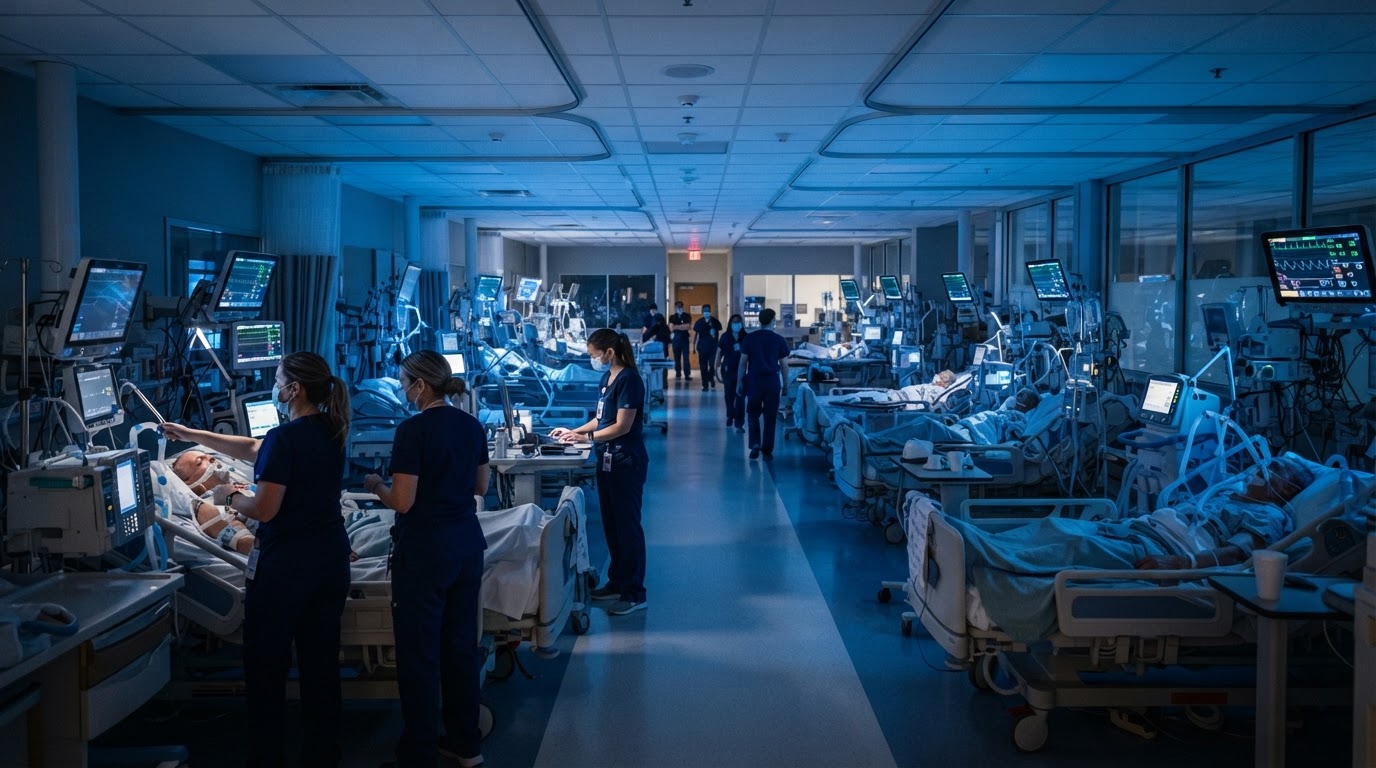
Medical Intensive Care Unit (MICU)
Medical ICUs caring for the sickest medical patients, septic shock, respiratory failure, diabetic crises, and multi-organ failure requiring ventilator support, vasoactive drips, and continuous monitoring.
Surgical Intensive Care Unit (SICU)
Surgical ICUs managing the highest-acuity post-operative patients, emergency surgery, major vascular, trauma, and complex abdominal procedures requiring ventilator support, hemodynamic monitoring, and complication vigilance.
Cardiac Intensive Care Unit (CICU)
Cardiac ICUs managing the most acute cardiac patients, cardiogenic shock, post-MI complications, severe heart failure, and post-arrest patients requiring mechanical circulatory support and advanced hemodynamic monitoring.