Medical Intensive Care Unit (MICU)
The front line of life-threatening medical illness
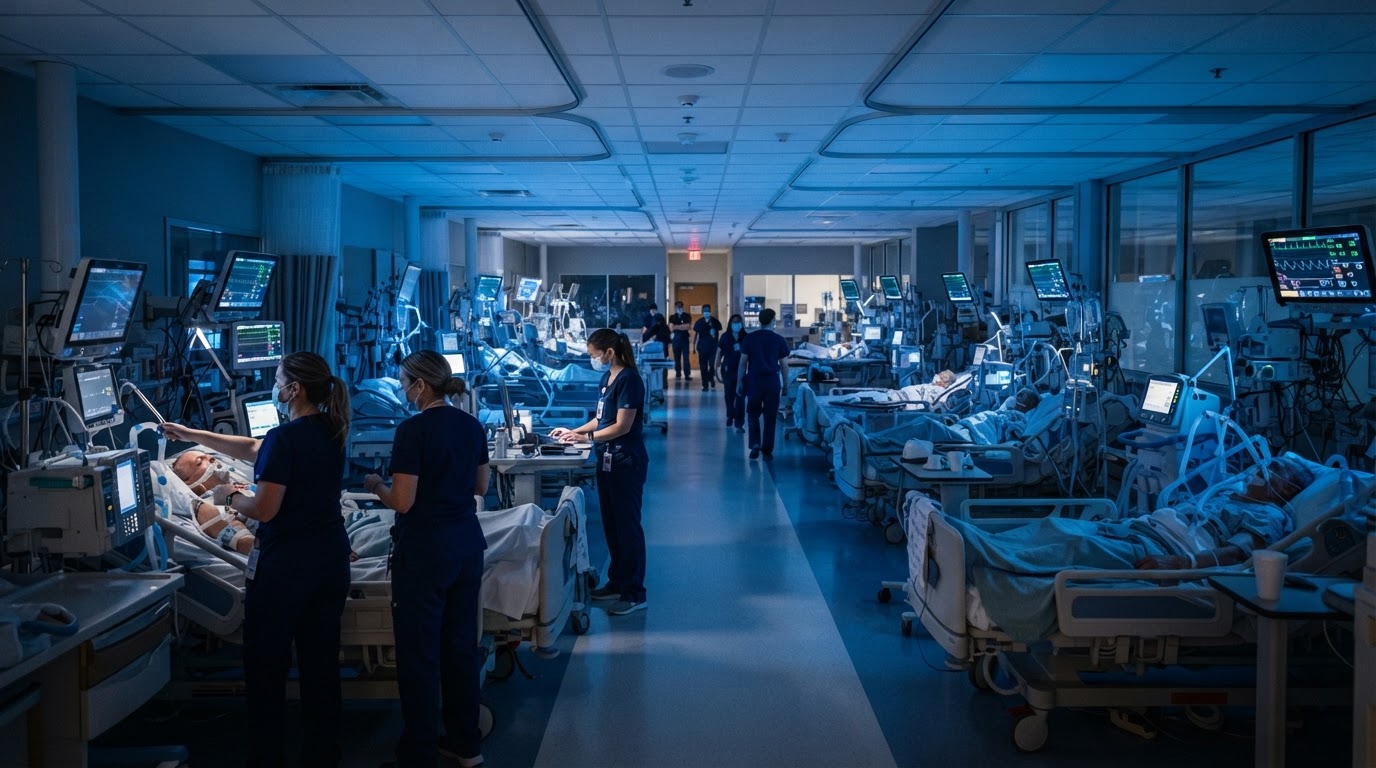
Walk into a Medical Intensive Care Unit and the first thing that hits you is the sound, the steady beep of cardiac monitors, the rhythmic whoosh of ventilators, the occasional sharp alarm that sends a nurse reaching for the controls. The patients here are the sickest in the hospital. They arrived through the emergency department or were transferred up from a critical care when they crashed, and now they depend on machines and medications to keep them alive while their bodies try to heal. A MICU nurse typically cares for one or two patients at a time, but those patients can change by the hour. Someone on three pressors and a ventilator this morning may be sitting up eating by afternoon, and the bed next door may have just been intubated. The pace is relentless, the stakes are absolute, and the nurse is the person who notices the trend before the lab result comes back.
Nurse-to-Patient Ratio
Typically 1:1 for the most unstable patients and 1:2 for stabilized patients, governed by acuity scoring and facility policy.
Note: Nurse-to-patient ratios in critical care are governed by individual state regulations, professional guidelines, or by the hospital's own staffing model. There is no single national standard. Some units also elect a team-based approach that incorporates advanced practice providers, respiratory therapists, and CNAs to extend care delivery. The ratios and staffing model described here are illustrative and for demonstration only; actual assignments vary by facility, acuity, and location.
Key Credentials
What Is a Medical Intensive Care Unit (MICU)?
A Medical Intensive Care Unit, or MICU, is a specialized inpatient unit that provides the highest level of care for adults with life-threatening medical conditions. Unlike a surgical or cardiac ICU, the MICU manages medical illness, severe sepsis and septic shock, acute respiratory failure, diabetic ketoacidosis, acute kidney injury requiring dialysis, gastrointestinal bleeding, and the multi-organ failure that follows any of these. Patients are typically on mechanical ventilation, receiving vasoactive medications through central lines, and monitored continuously for hemodynamic and respiratory status. The unit operates with a 1:1 or 1:2 nurse-to-patient ratio, intensivist oversight, and a full complement of respiratory therapists, pharmacists, and advanced practice providers.
The Patient Population
Adults of every age, though the majority are older and carry significant chronic disease. The most common admissions are septic shock from pneumonia, urinary tract infections, or abdominal sources; acute respiratory failure from COPD, asthma, pneumonia, or ARDS; diabetic emergencies like ketoacidosis and hyperosmolar hyperglycemic state; acute kidney injury requiring continuous renal replacement therapy; and patients who deteriorated on a critical care and needed rapid escalation. You also see overdose patients, liver failure with encephalopathy, and patients with severe electrolyte disturbances. The unifying thread is that none of them would survive without the level of support the MICU provides.
The Nurse's Role
The MICU nurse manages one or two patients at a time, and the depth of attention per patient is what defines the role. On a typical shift the nurse is titrating two or three vasoactive drips to hemodynamic targets, managing a ventilator in coordination with respiratory therapy, performing frequent head-to-toe assessments, turning and repositioning an intubated patient every two hours, tracking hourly intake and output, drawing and interpreting arterial blood gases, and communicating changes to the intensivist. The nurse manages central lines, arterial lines, and sometimes continuous renal replacement therapy. They administer sedation and analgesia to keep the intubated patient comfortable, monitor for delirium, and coordinate with families during some of the worst moments of their lives. When a patient codes, the MICU nurse is already in the room.
Skills Required
Ventilator management and weaning protocol execution
Titration of vasoactive drips, norepinephrine, vasopressin, epinephrine, dobutamine
Arterial and central line management and hemodynamic interpretation
Arterial blood gas analysis and rapid response to acid-base disturbances
Continuous renal replacement therapy monitoring
Sepsis bundle execution and time-sensitive resuscitation
The Real Challenges
The MICU demands a kind of sustained vigilance that few other jobs require. A patient on a norepinephrine drip can become hypotensive within minutes if the dose is not adjusted to a changing vascular tone, and the nurse managing two such patients has to hold both trajectories in mind simultaneously. The emotional weight is real, these patients are often at the edge of life, families are frightened and exhausted, and the nurse is the person who translates clinical reality into words a family can understand. Burnout and moral distress are documented risks in critical care, particularly around end-of-life decisions and the tension between aggressive treatment and futility. The physical demands are also significant: turning a ventilated patient, performing bedside procedures, and being on your feet for twelve hours takes a toll.
Why This Unit Matters
The MICU is where hospitals prevent death. The care delivered here, early sepsis recognition, lung-protective ventilation, goal-directed hemodynamic management, has been studied extensively, and the evidence is clear that the quality of critical care nursing directly affects mortality. A nurse who catches a rising lactate, a widening pulse pressure, or a subtle change in mental status before the numbers crash buys the patient the time they need to recover. Beyond survival, the MICU shapes what survival looks like. Patients who are well-managed through critical illness are more likely to leave the hospital functional and less likely to carry the long-term cognitive and physical burden of post-intensive care syndrome.
Frequently Asked Questions
What is a Medical Intensive Care Unit (MICU)?
A MICU is a specialized hospital unit that provides the highest level of care for adults with life-threatening medical conditions such as septic shock, respiratory failure, and multi-organ failure. Patients are typically on ventilators and vasoactive medications, with nurses managing one or two patients at a time under intensivist oversight.
What is the nurse-to-patient ratio in a MICU?
MICU ratios are typically 1:1 for the most unstable patients and 1:2 for stabilized patients, though this is governed by acuity scoring, facility policy, and state regulation. There is no single national mandate, and ratios can shift hour to hour as patients deteriorate or improve.
What does CCRN certification mean?
CCRN stands for Critical Care Registered Nurse, a credential administered by the American Association of Critical-Care Nurses. It validates a nurse's expertise in caring for acutely and critically ill adult patients and is widely recognized as the standard certification for ICU nursing.
Hiring for a MICU Unit?
We connect facilities with experienced critical care nurses whose backgrounds align with medical intensive care unit (micu) staffing needs. Start a confidential conversation about your opening today. Explore other critical care units or read the career roadmap.
The clinical information on this page is provided for general educational purposes only and reflects common practices across U.S. critical care settings. It is not medical advice, a clinical standard, or a guarantee of any specific staffing model, patient outcome, or credentialing requirement. Nurse-to-patient ratios, scope of practice, required certifications, and unit protocols vary by facility, state law, and accrediting body. Critical Care Recruiter is an independent recruitment facilitator that refers qualified candidates to client facilities; we do not employ, supervise, or direct the clinical care delivered by placed professionals. Final credentialing, licensure verification, and clinical competency determinations are the sole responsibility of the hiring facility.
Related Critical Care Units
Surgical Intensive Care Unit (SICU)
Surgical ICUs managing the highest-acuity post-operative patients, emergency surgery, major vascular, trauma, and complex abdominal procedures requiring ventilator support, hemodynamic monitoring, and complication vigilance.
Neuro Intensive Care Unit (Neuro ICU)
Neuro ICUs managing traumatic brain injury, stroke, subarachnoid hemorrhage, and post-neurosurgical patients, intracranial pressure monitoring, frequent neuro assessment, and tight physiologic control.
Cardiac Intensive Care Unit (CICU)
Cardiac ICUs managing the most acute cardiac patients, cardiogenic shock, post-MI complications, severe heart failure, and post-arrest patients requiring mechanical circulatory support and advanced hemodynamic monitoring.