Cardiac Intensive Care Unit (CICU)
Critical care for the failing heart
A Cardiac Intensive Care Unit is where the heart is the patient. The people here are in cardiogenic shock after a massive heart attack, in fulminant heart failure, recovering from cardiac arrest, or being supported by mechanical devices that are doing the work the heart cannot. The nursing work is deeply hemodynamic. Every number tells a story about how well the heart is pumping, the cardiac index, the mixed venous oxygen saturation, the pulmonary artery pressures, and the nurse is constantly adjusting medications and support to keep that story moving toward recovery. The technology is advanced: balloon pumps, Impella devices, extracorporeal membrane oxygenation. The CICU nurse has to understand not just what these machines do but how the patient responds to them, hour by hour.
Nurse-to-Patient Ratio
Typically 1:1 for patients on mechanical circulatory support or in active shock and 1:2 for stabilizing patients, governed by device requirements and acuity.
Note: Nurse-to-patient ratios in critical care are governed by individual state regulations, professional guidelines, or by the hospital's own staffing model. There is no single national standard. Some units also elect a team-based approach that incorporates advanced practice providers, respiratory therapists, and CNAs to extend care delivery. The ratios and staffing model described here are illustrative and for demonstration only; actual assignments vary by facility, acuity, and location.
Key Credentials
What Is a Cardiac Intensive Care Unit (CICU)?
A Cardiac Intensive Care Unit, or CICU, is a specialized critical care unit dedicated to patients with life-threatening cardiac conditions. The unit manages cardiogenic shock, acute myocardial infarction with complications, decompensated heart failure, post-cardiac arrest patients, and those requiring mechanical circulatory support. Care centers on advanced hemodynamic monitoring, pulmonary artery catheters, arterial lines, continuous cardiac output, and the management of vasoactive, inotropic, and antiarrhythmic medications. The unit also manages mechanical support devices like intra-aortic balloon pumps, Impella, and ECMO. The CICU operates with cardiology and cardiothoracic surgery oversight and a 1:1 or 1:2 nurse-to-patient ratio.
The Patient Population
Adults with acute, life-threatening cardiac conditions. Common populations include patients in cardiogenic shock after a massive myocardial infarction, those with decompensated heart failure on inotropic support, post-cardiac arrest patients receiving targeted temperature management, patients with malignant arrhythmias, and those who have developed mechanical complications of heart attack like ventricular septal rupture. The unit also supports patients on mechanical circulatory support as a bridge to recovery, to a ventricular assist device, or to transplant. The population skews toward older adults with significant cardiovascular comorbidity, though post-arrest and cardiomyopathy patients can be any adult age.
The Nurse's Role
The CICU nurse manages one or two patients with advanced cardiac monitoring as the central focus. The role involves interpreting pulmonary artery catheter data, titrating inotropic and vasoactive medications to optimize cardiac output and perfusion, managing mechanical circulatory support devices, and monitoring for arrhythmias and hemodynamic deterioration. The nurse administers antiarrhythmic medications, manages continuous renal replacement therapy for the cardiorenal patient, coordinates with cardiology on interventions and device management, and supports families through the uncertainty of critical cardiac illness. The nurse is also central to post-arrest care, managing targeted temperature protocols and neuroprotection while monitoring for recovery of neurological function.
Skills Required
Advanced hemodynamic monitoring, pulmonary artery catheter, continuous cardiac output, mixed venous saturation
Titration of inotropic, vasoactive, and antiarrhythmic medications
Mechanical circulatory support management, IABP, Impella, ECMO
Post-cardiac arrest care and targeted temperature management
Malignant arrhythmia recognition and intervention
Cardiorenal syndrome management and continuous renal replacement therapy
The Real Challenges
The CICU sits at the intersection of advanced technology and profound human stakes. A patient on an Impella device is being kept alive by a machine, and the nurse managing that device has to understand its alarms, its flow parameters, and the patient's response to the level of support, and recognize immediately when something changes. The hemodynamic data is complex and requires real-time interpretation: a falling cardiac index, a rising pulmonary artery pressure, a widening arterial-venous oxygen difference each tell a different story about what the heart is doing. The emotional weight is significant. Post-arrest families are confronting the possibility of neurological devastation, and the nurse is often the person helping them understand what the neurological exam shows and what the prognosis may be.
Why This Unit Matters
Cardiac critical care is where some of the highest-stakes, most time-sensitive interventions in medicine happen. The quality of nursing in the CICU directly affects survival from cardiogenic shock, recovery from cardiac arrest, and the success of mechanical circulatory support. Early recognition of hemodynamic deterioration, precise titration of inotropic support, and vigilant arrhythmia monitoring are the mechanisms by which a failing heart is given the time it needs to recover or to be bridged to definitive therapy. The CICU is also central to the hospital's cardiac service line, which carries significant volume, quality metrics, and reimbursement.
Frequently Asked Questions
What is a Cardiac Intensive Care Unit (CICU)?
A CICU is a specialized critical care unit dedicated to patients with life-threatening cardiac conditions, cardiogenic shock, post-MI complications, decompensated heart failure, and post-cardiac arrest patients. Nursing focuses on advanced hemodynamic monitoring, vasoactive and inotropic medication management, and mechanical circulatory support.
What is mechanical circulatory support in a CICU?
Mechanical circulatory support refers to devices that assist or replace the pumping function of the heart, including intra-aortic balloon pumps, Impella devices, and extracorporeal membrane oxygenation (ECMO). These devices are used to support patients in cardiogenic shock while the heart recovers or as a bridge to definitive treatment like a ventricular assist device or transplant.
What does a pulmonary artery catheter measure?
A pulmonary artery catheter measures pressures within the heart and pulmonary circulation, cardiac output, and mixed venous oxygen saturation. These measurements help the CICU team assess how well the heart is pumping, guide titration of inotropic and vasoactive medications, and monitor the patient's response to treatment.
Hiring for a CICU Unit?
We connect facilities with experienced critical care nurses whose backgrounds align with cardiac intensive care unit (cicu) staffing needs. Start a confidential conversation about your opening today. Explore other critical care units or read the career roadmap.
The clinical information on this page is provided for general educational purposes only and reflects common practices across U.S. critical care settings. It is not medical advice, a clinical standard, or a guarantee of any specific staffing model, patient outcome, or credentialing requirement. Nurse-to-patient ratios, scope of practice, required certifications, and unit protocols vary by facility, state law, and accrediting body. Critical Care Recruiter is an independent recruitment facilitator that refers qualified candidates to client facilities; we do not employ, supervise, or direct the clinical care delivered by placed professionals. Final credentialing, licensure verification, and clinical competency determinations are the sole responsibility of the hiring facility.
Related Critical Care Units
Medical Intensive Care Unit (MICU)
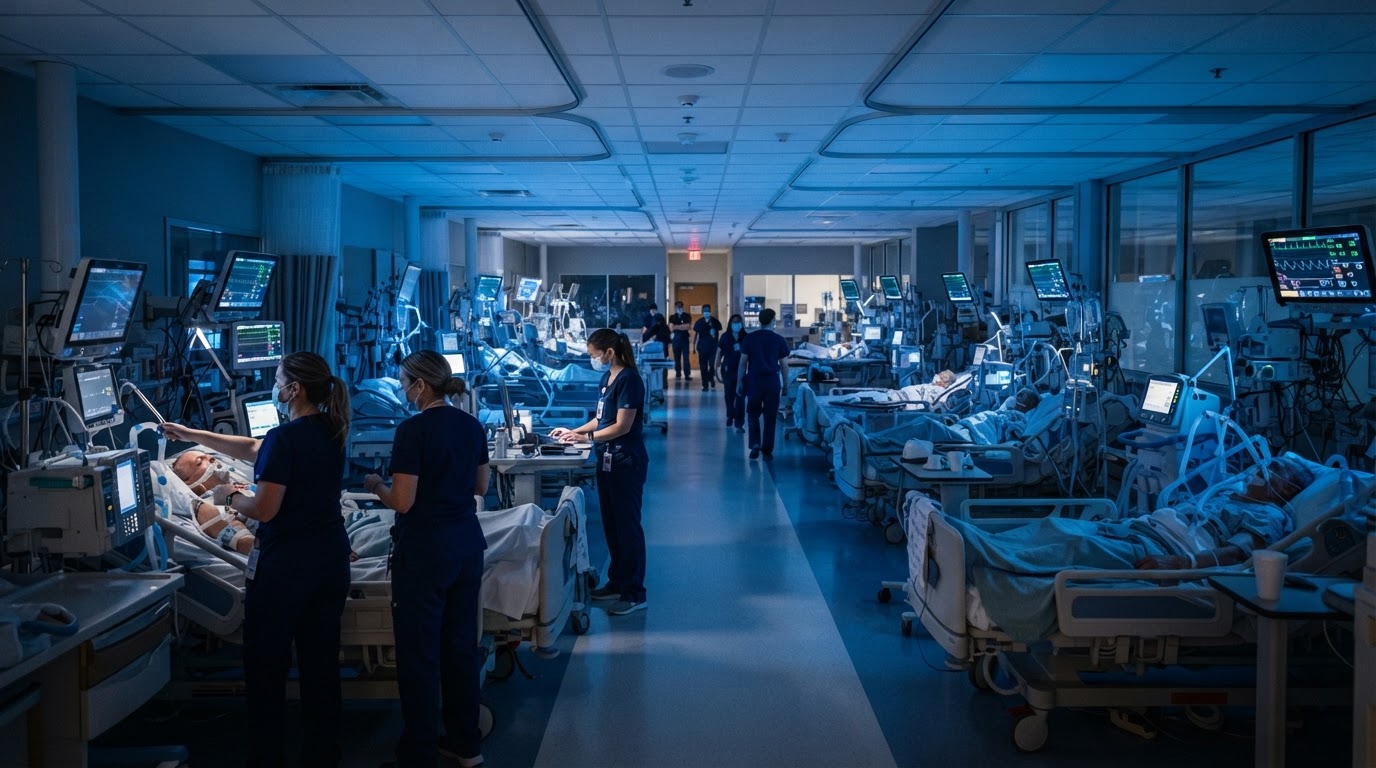
Medical ICUs caring for the sickest medical patients, septic shock, respiratory failure, diabetic crises, and multi-organ failure requiring ventilator support, vasoactive drips, and continuous monitoring.
Surgical Intensive Care Unit (SICU)
Surgical ICUs managing the highest-acuity post-operative patients, emergency surgery, major vascular, trauma, and complex abdominal procedures requiring ventilator support, hemodynamic monitoring, and complication vigilance.
Neuro Intensive Care Unit (Neuro ICU)
Neuro ICUs managing traumatic brain injury, stroke, subarachnoid hemorrhage, and post-neurosurgical patients, intracranial pressure monitoring, frequent neuro assessment, and tight physiologic control.